
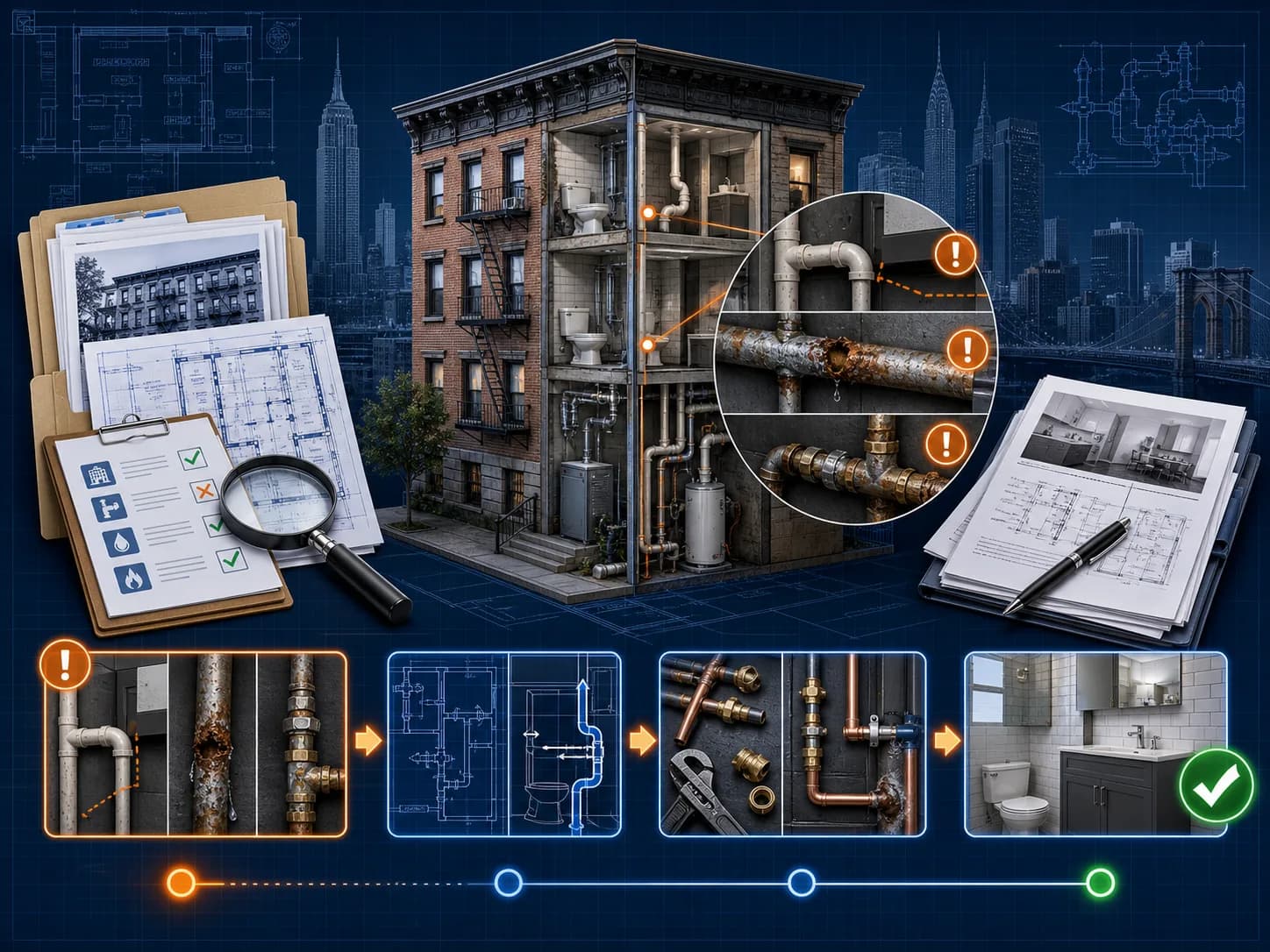
Key takeaways
- Pull public records before the transaction schedule becomes compressed.
- Compare open records with the actual plumbing, gas, boiler, and renovation conditions.
- Use accepted closeout documents—not verbal assurances—as the transaction record.
An open DOB or HPD plumbing violation discovered during due diligence can affect contract, lender, insurance, escrow, or closing decisions, depending on the record and the parties involved.
Public DOB, HPD, permit, and OATH records can be reviewed by buyers, counsel, lenders, insurers, boards, and title professionals. The consequence is transaction-specific: an open item may prompt a cure request, exception, escrow discussion, price or contract negotiation, additional diligence, or no closing condition at all. Transaction counsel and the other parties—not a plumber—decide what the deal documents require.
How Violations Show Up in a Real Estate Transaction
NYC property diligence often includes searches of DOB, HPD, OATH, permit, and equipment records, depending on the property and transaction. DOB's building-data tools and HPD Online are public starting points, but they do not determine the contract result by themselves.
An open record should be identified and explained early. Possible outcomes, subject to the contract, lender, title, board, and counsel, include:
- A cure or documentation request. A party may ask the seller to correct the condition, close the record, or explain why it remains open.
- A lender, title, insurance, or board condition. The reviewing party may require additional evidence or impose its own condition based on underwriting and transaction terms.
- An escrow or contractual allocation. Counsel may negotiate a holdback, credit, survival obligation, or other risk allocation when closeout cannot be completed before closing.
- A schedule or price effect. Material scope, uncertainty, or timing can affect negotiation or the closing schedule, but the outcome is not automatic.
The cleaner the record going into the transaction, the smoother — and faster — the path to closing.
The Most Common Plumbing Violations That Appear at Closing
DOB Plumbing Violations and OATH Summonses
These records can identify unpermitted work, improper installations, failed inspections, or other conditions. Use the classification, infraction code, and dates on the actual record; DOB’s building-data tools are the starting point for confirming current status.
Common triggers: unpermitted bathroom additions, illegal basement kitchens or bathrooms, unpermitted gas line work, failed permit sign-offs where a permit was pulled but work was never inspected and signed off.
HPD Plumbing Violations
HPD violations are issued through HPD's enforcement process and can relate to heat, hot water, leaks, and other housing-maintenance conditions. They appear in HPD Online and may be part of buyer or lender diligence; whether they create a closing condition depends on the transaction.
Open Permits with No Sign-Off
This is one of the most common and least anticipated issues in NYC real estate transactions. A prior owner pulled a permit—for a boiler replacement, bathroom renovation, or gas-line installation—and never obtained final sign-off. Open permits are not violations, but buyers, lenders, attorneys, boards, or title professionals may require an explanation or closeout depending on the transaction.
Closing an open plumbing permit can require locating the original scope, checking the filed record against field conditions, completing outstanding work or inspections, and using the applicable DOB closeout path. If a different Licensed Master Plumber must take responsibility for remaining work, the project team should confirm DOB's current supersede or takeover requirements before proceeding.
If the open plumbing record is tied to a development or alteration that still needs occupancy approval, the TCO and Final CO plumbing sign-off workflow shows how to trace the main job, associated plumbing permits, inspections, floor recommendations, and Certificate of Occupancy request without treating them as one record.
Stop Work Orders
An active stop-work order is a material due-diligence issue. Transaction counsel should determine what the deal requires while the project team addresses the DOB rescission path. See the full guide on how to remove a plumbing stop work order in NYC.
How Long Does It Take to Clear Violations Before a Sale?
There is no responsible universal estimate. Timing depends on the physical correction, permit scope, inspection availability, OATH schedule, agency review, access, and whether multiple records can move in parallel. Build the transaction plan around documented milestones and contingencies, not a promised number of weeks.
What a Pre-Sale Plumbing Inspection Does
A pre-sale plumbing inspection is a proactive assessment conducted before a property goes to market — or at minimum before the contract stage — to identify any open violations, unpermitted work, or code deficiencies that are likely to surface during buyer due diligence.
A Licensed Master Plumber's pre-sale scope may include:
- Review relevant DOB, HPD, OATH, permit, boiler, gas, or backflow records available for the property
- Physically inspect the plumbing and gas systems for any conditions likely to generate an inspection failure
- Identify any work that appears to have been done without permits or that was permitted but never signed off
- Document the observed conditions, known record gaps, likely licensed scope, and the milestones that still depend on agencies or other parties
The written assessment gives the owner a practical working record before the schedule compresses. It is not a legal opinion, title report, agency determination, or promise that a reviewing party will accept a particular closeout plan.
Documentation That Works at the Closing Table
When Austin Plumbing completes violation work, the closeout file can include the relevant agency status, permit sign-off, inspection result, and LMP documentation applicable to the scope. The transaction’s attorney, lender, buyer, or title professional decides whether that record satisfies the deal.
This matters because field completion, agency acceptance, payment, hearing disposition, permit sign-off, and transaction acceptance are different facts. A verbal contractor confirmation is weak evidence compared with the relevant accepted agency record, but counsel and the reviewing party decide what documentation is sufficient for the deal.
For more on the full DOB plumbing violation removal process, including how we handle multi-agency situations, that page covers the complete picture.
Also use the buyer-side DOB and HPD lookup guide and Austin’s pre-sale plumbing inspection service before the transaction schedule becomes compressed.
Common Questions
Can an open plumbing violation delay an NYC closing?
It can affect lender, title, buyer, attorney, or board review depending on the record and transaction terms. The parties should identify the cure and documentation plan early.
Is a paid summons the same as a cleared building record?
No. Payment may resolve a penalty while a DOB, HPD, permit, or equipment record remains open. Verify each system separately.
When should a seller order a plumbing compliance review?
Before listing or early in transaction preparation, especially when renovations, gas work, boilers, open permits, or unclear DOB and HPD records exist.