
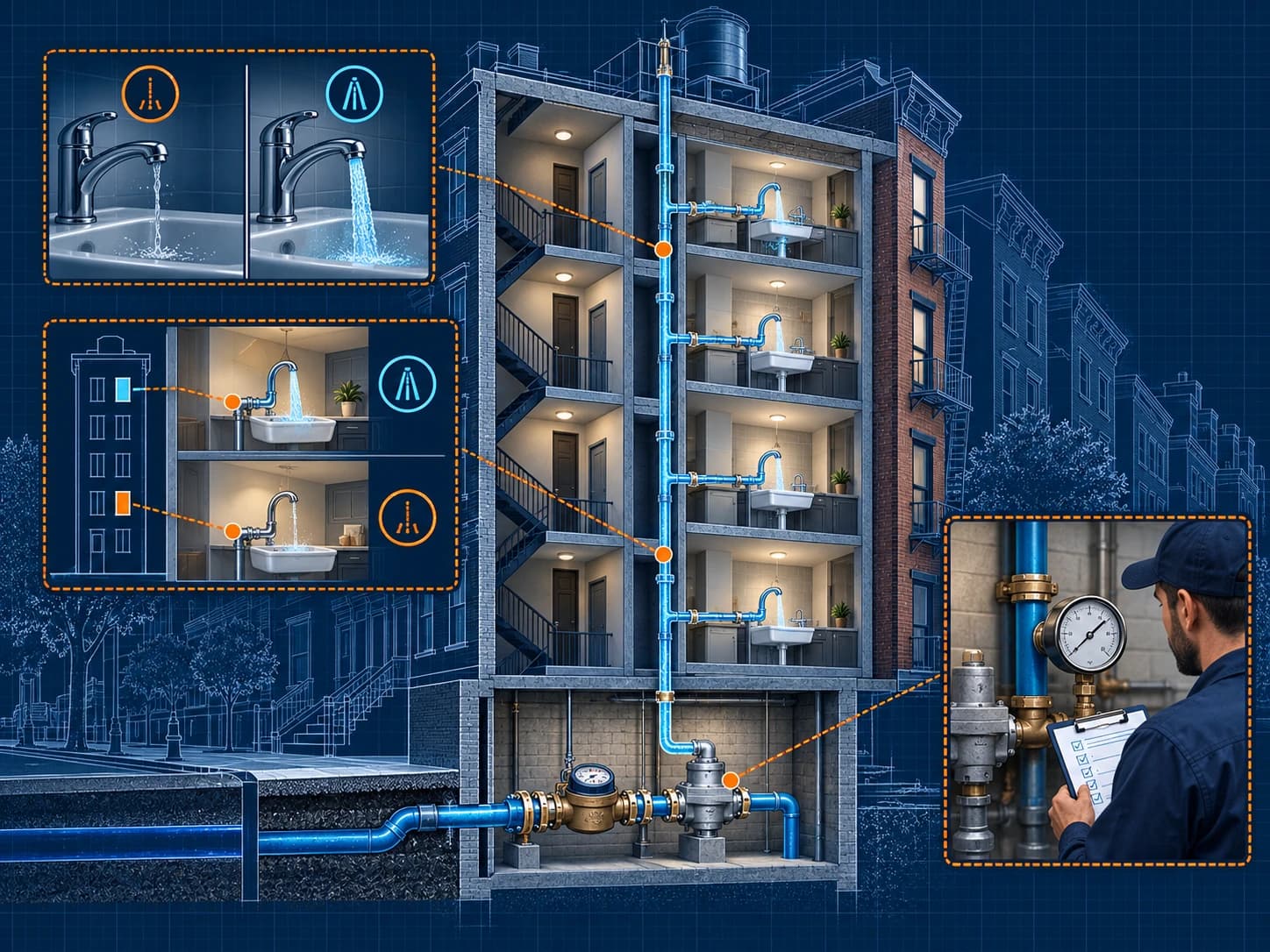
Low water pressure across a building should start with a map of the symptoms, followed by professional measurements—not a replacement order. Identify where the problem occurs, whether hot and cold water behave differently, and whether the change is constant or tied to particular times. Those observations help a licensed plumber decide what to investigate.
A weak stream does not establish that a riser is blocked, a pressure-reducing valve has failed, or the street supply is inadequate. Keep the cause open until the evidence supports a repair scope.
First, separate weak flow from measured pressure
Flow describes how much water comes through a fixture over time. Pressure describes the force driving it. A restriction can reduce flow even when the pressure elsewhere is normal. The Portland Water Bureau's explanation of pressure and flow supports this general distinction; its local pressure ranges and utility procedures do not establish NYC requirements.
For an owner, “the shower is weak” is a useful starting observation. It is not a pressure reading. Ask the professional's report to distinguish what occupants observed from what was measured, including the measurement location and operating conditions.
If there is active flooding or another immediate hazard, prioritize an urgent response over completing a symptom log. Do not enter flooded equipment areas or operate unfamiliar building controls to investigate.
Build a location-and-time record
Before the visit, collect observations already available from occupants and building staff. Avoid deliberately interrupting water service or creating a building-wide demand test yourself.
| Record | Useful detail for the service visit |
|---|---|
| Location | Apartment or common area, floor, and specific fixture |
| Supply | Cold only, hot only, or both; note if it is unclear |
| Timing | Constant, intermittent, or noticed during a particular period |
| Onset | First observed date; sudden change or gradual deterioration |
| Comparison | A nearby fixture or another floor that still behaves normally |
| Recent events | Plumbing work, a shutoff notice, equipment service, or an outage |
| Impact | Whether occupants can use the affected fixtures normally |
Do not collect tenant details beyond what the building needs to arrange access and document the issue. Keep the log in the building's service file rather than posting apartment information publicly.
Use the pattern to organize the investigation
Comparing fixtures and hot versus cold supplies can help narrow an investigation. Restricted fixtures, older piping, leaks, pressure-regulating equipment, and supply interruptions are possible causes described in the Water Bureau's troubleshooting guidance. None is a diagnosis for your property.
Give the plumber a short list of questions:
- One fixture: Does the issue remain local when nearby fixtures work normally?
- Several fixtures in one area: What supplies those fixtures, and what comparison would distinguish a local problem from a shared one?
- Several floors: Which risers or supply zones serve the affected locations? Are there useful unaffected comparison points?
- Hot only: Should the investigation follow the hot-water equipment and distribution path rather than the entire incoming supply?
- Whole building: What findings distinguish an internal condition from a possible service-line or utility issue?
A building may have pressure-regulating equipment, pumps, tanks, or multiple supply zones. Ask the professional to identify the actual arrangement from the site and records. Do not assume every NYC building has the same components or that a complaint on an upper floor proves a particular component failed.
For separate problems involving hot-water delivery, use the multifamily hot-water triage guide to organize that service discussion.
Ask for a diagnosis before choosing a replacement
The service report should connect the proposed work to the observed problem. Ask for:
- The affected and unaffected locations checked.
- The measurements taken and the conditions under which they were taken.
- The equipment or piping section implicated by the findings.
- Any remaining uncertainty and the next check needed to resolve it.
- A defined repair scope and a plan to compare conditions afterward.
This prevents a quote from becoming the first and only explanation of the problem. If the initial visit cannot reproduce an intermittent issue, agree on what additional observations would make a return visit useful.
Do not adjust a pressure-reducing valve, change pump controls, bypass a backflow device, or turn unfamiliar service valves based on an online checklist. This guide is for planning the professional investigation, not performing it.
Know where DEP and the building's responsibility meet
NYC311's owner guidance says property owners are responsible for water and sewer lines from the building to their connection with the street main, including the portion beneath the sidewalk. It also explains that owners can ask DEP to investigate after a licensed plumber determines the problem is outside the owner's responsibility.
Keep the plumber's written findings, any outage notice, and the DEP service-request number together. A reported neighborhood problem is useful context, but it should not replace the investigation of your building. If DEP issues a service-line notice, the owner next-steps guide helps organize that separate response.
Tenants should notify their landlord, managing agent, or superintendent. NYC311 also provides a complaint route for unresolved apartment water conditions; that reporting process does not itself identify the failed component.
Agree on access, scope, and verification
Before authorizing work, confirm which areas need access, who will coordinate occupants, and how any required interruption will be communicated. Ask the Licensed Master Plumber to identify the applicable filing and inspection path for the actual scope.
DOB distinguishes simple fixture repairs from work that alters piping. Do not assume that all pressure-related work is permit-free, or that every weak fixture requires a major filing.
After the work, compare the same affected locations and record any unresolved complaints. Retain the service findings, scope, applicable records, and follow-up responsibilities in one file. Building managers can coordinate this through Austin's building services.
Bring Austin the pattern, not a guessed part
Start with the affected locations, timing, recent work, and available notices. Request plumbing service so the next step can be based on the building's actual conditions. The purpose of the first review is to identify what needs investigation and what evidence supports the proposed work.
Common Questions
Does weak water flow prove that an NYC building needs repiping?
No. A weak stream is a symptom. Record which fixtures, floors, and hot or cold supplies are affected, then have a licensed plumber identify the cause before choosing a repair scope.
Should an owner call DEP or a plumber about low water pressure?
NYC311 provides an owner reporting path. It says an owner can ask DEP to investigate when a licensed plumber has determined that the problem is outside the owner's responsibility. Keep the plumber's findings and the service-request number together.
Should I adjust a pressure-reducing valve to improve flow?
Do not use this guide to adjust valves, pumps, controls, or protective devices. Have a qualified professional identify the equipment and evaluate the system before recommending changes.
What information should a building manager collect before the visit?
Record the affected fixture and floor, whether hot and cold water differ, when the problem occurs, when it started, recent work or outage notices, and locations that still work normally. Arrange access with occupants.