Key takeaways
- Restaurant gas startup is a chain of separate approvals. Licensed installation, FDNY rangehood acceptance, DOB inspection and gas authorization, and utility startup are related, but none is a substitute for the others.
- Freeze the real cooking-equipment schedule before inspection. The installed appliances, gas load, piping, shutoffs, hood, and fire-suppression coverage need to describe the same kitchen.
- Track the record owner at every handoff. The Licensed Master Plumber, master fire suppression piping contractor, design team, owner, and serving utility each control different work or documents.
- Gas authorization does not automatically open a meter or close the plumbing job. Keep utility startup and final DOB closeout on separate lines in the opening tracker.
An NYC restaurant can have a finished-looking cooking line and still be unable to start gas service. The usual problem is not one missing form. It is a handoff failure: the kitchen equipment changed after the suppression plan, the FDNY acceptance record is not ready for DOB, the gas inspection cannot match the installed appliances, or the serving utility has not accepted its own startup package.
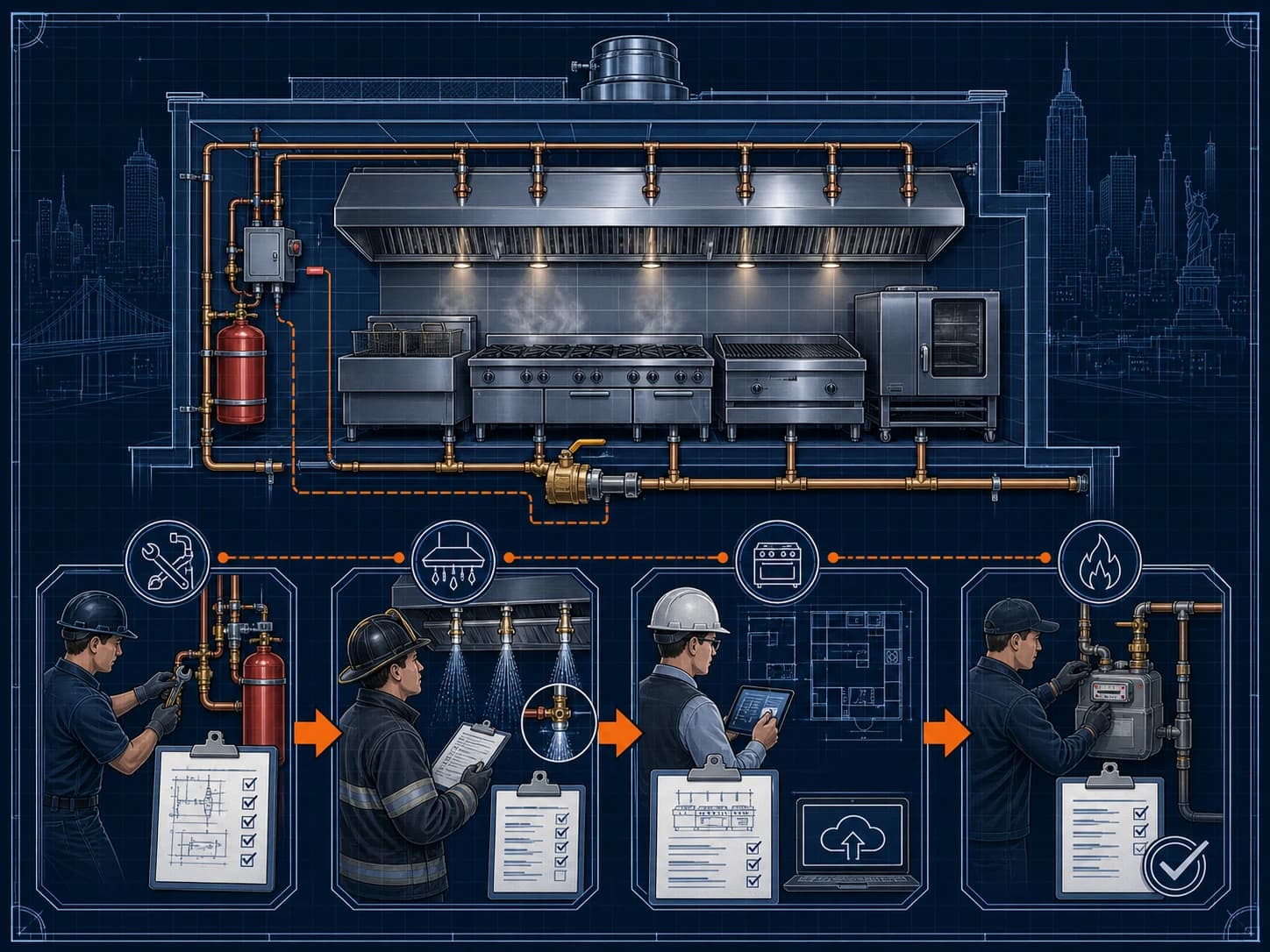
The practical sequence is to coordinate four lanes from one final equipment schedule: licensed gas and suppression work, FDNY acceptance, DOB gas authorization, and utility startup. NYC's current Gas Authorization for Restaurants guidance describes those as distinct steps. It also states that gas authorization does not start service automatically; the owner or representative still has to coordinate the account, meter, and start date with the utility.
This guide focuses on that restaurant-specific chain. For the full pre-opening plumbing file—including grease, backflow, hot water, drainage, and lease questions—use the NYC restaurant plumbing checklist. For a project involving restoration after a shutoff, use the separate gas authorization, plumbing sign-off, and utility restoration guide.
What are the four restaurant gas handoffs?
Treat the project as four connected records rather than one broad “gas approval.” The actual sequence and filing path can vary with the scope, but the responsibility boundaries stay useful.
| Handoff | Primary owner | Evidence to collect | What it does not prove |
|---|---|---|---|
| Licensed installation | Licensed Master Plumber and master fire suppression piping contractor, with the design and buildout team | Approved scope, equipment schedule, permits, installed gas piping and appliances, suppression layout, test records | That FDNY, DOB, or the utility has accepted the work |
| FDNY acceptance | FDNY Rangehood Unit and the fire suppression contractor | Accepted plans, inspection and test result, approval or acceptance record, operating permit when applicable | That DOB has approved gas authorization or the utility will start service |
| DOB inspection and gas authorization | DOB Plumbing Unit and the Licensed Master Plumber | Applicable inspection results, FDNY acceptance documents, submitted and approved gas authorization record | That the meter is set, the account is active, or every plumbing closeout item is complete |
| Utility startup | Con Edison or National Grid, depending on the address | Utility case, accepted service package, site and meter readiness, utility field result, startup confirmation | That every separate DOB permit, sign-off, or restaurant operating approval is closed |
The owner should keep one tracker with the exact record, current status, person responsible, missing item, and proof of completion for each row. “Waiting on DOB” or “waiting on the gas company” is not a usable project status.
What must be coordinated before FDNY inspection?
The hood, cooking appliances, gas shutoff, and fire-extinguishing system must be treated as one coordinated commercial cooking system. The fire-suppression contractor cannot finalize coverage around a placeholder equipment plan while the plumber installs a different cooking line.
The current FDNY Restaurant Fire Safety Guide says the Rangehood Unit inspects the cooking exhaust and fire-extinguishing systems against the accepted plans, codes, and manufacturer requirements, witnesses the fire-extinguishing acceptance test, and witnesses the cooking-exhaust performance test. The guide also explains that the suppression system connects to the cooking line's fuel source so activation shuts off that source.
Before requesting that inspection, confirm:
- The installed ranges, fryers, ovens, broilers, and other covered appliances match the equipment plan.
- The hood and exhaust arrangement match the accepted scope.
- The nozzles protect the final appliance positions.
- The suppression system operates the intended gas shutoff or other fuel interlock.
- The gas piping and valves do not conflict with the suppression work.
- The contractor has the approved plans, permits, affidavits, and test documents required for the request.
NYC's current rangehood fire-suppression filing guidance says new installations, ownership changes, equipment rearrangements, equipment removals, and changes to plumbing or gas shutoff valves can require a rangehood filing. That is why a late equipment substitution can affect more than procurement: it may change the accepted suppression layout and the next inspection.
What does DOB need for restaurant gas authorization?
After the applicable FDNY step, the Licensed Master Plumber coordinates the DOB gas inspection and authorization request. NYC's restaurant guidance says all gas cooking equipment must be fully installed when the DOB Plumbing Unit inspects it, and that the approved FDNY letters are provided to DOB before the online gas authorization is approved.
DOB's current plumbing project requirements show that gas authorization can depend on scope-specific inspections and documents. The team should not assume that one successful pressure test or one inspection result completes every prerequisite.
For the owner file, collect:
- the DOB job, permit, or LAA number covering the gas work;
- the final installed cooking-equipment schedule and gas input information;
- gas roughing, finish, pressure-test, and other applicable inspection results;
- the FDNY acceptance records for the covered cooking systems;
- the gas authorization request status and approved report when issued;
- any remaining objections, inspection items, or plumbing sign-off work; and
- the serving utility's case number and named next requirement.
Gas authorization is a specific handoff record. It does not automatically mean the plumbing permit is finally signed off, the restaurant may operate, or the utility has started service. Keep those conclusions separate.
When should the utility be involved?
The utility lane should begin before the final inspection week. The project team first needs to identify the serving utility, then confirm whether the existing service, meter, and approved load can support the proposed cooking equipment.
For a new service, load change, meter change, relocation, or service upgrade, the utility may need design and construction coordination long before DOB gas authorization is ready. For a space with an existing meter and no service change, the remaining account and startup path may be narrower. Neither case should be inferred from the presence of a meter alone.
Con Edison's building and remodeling guidance separates municipal certifications, customer service applications, gas pressure-test documentation, final checklist, site readiness, final inspection, meter installation, and turn-on. National Grid publishes its own gas service forms and paperwork. The useful rule is to obtain the current checklist for the exact address and project rather than copying another restaurant's package.
Ask the utility or its project representative:
- Is this an account transfer, meter unlock or turn-on, new meter, load increase, service upgrade, or new service?
- What equipment and connected-load information must be approved?
- Which DOB authorization, inspection, pressure-test, or contractor documents are required?
- What field and meter conditions must be ready before the appointment?
- Who must provide access, and which rooms or equipment must be accessible?
- What record will confirm that the utility stage is complete?
Do not promise an opening date from an estimated utility appointment. A rejected document, changed load, inaccessible meter, failed field check, or mismatch between the authorization and installed equipment can send the handoff backward.
How should the opening team manage changes?
Restaurant projects change quickly: a chef substitutes equipment, a landlord limits a roof or shaft route, a fabricator revises the hood, or the existing gas service proves different from the lease package. The tracker should show how each change affects all four lanes.
Use this change-control check before approving a substitution:
| Proposed change | Recheck before proceeding |
|---|---|
| Appliance type, quantity, or gas input changes | Gas load, pipe sizing, approved equipment schedule, suppression coverage, DOB inspection scope, utility load approval |
| Appliance moves under the hood | Nozzle coverage, hood and exhaust plan, gas branch and shutoff position, FDNY filing or amendment need |
| Hood, fan, duct, or suppression system changes | Design filings, accepted plans, contractor scope, performance and acceptance tests |
| Meter or service work changes | Utility case type, site readiness, permit and inspection dependencies, appointment ownership |
| Opening date changes | Expiring permits or approvals, contractor availability, inspection sequencing, account and access coordination |
The owner should require the plumber, fire-suppression contractor, architect or engineer, GC, equipment vendor, and utility coordinator to work from the same dated equipment schedule. That document becomes the common reference when one team says the project is ready and another says it is not.
What should be in the final handoff file?
Keep the complete restaurant gas file after service starts. It is useful for inspection questions, equipment replacement, future repairs, landlord-tenant responsibility, and a later sale or takeover.
At minimum, retain:
- approved plans and the final equipment schedule;
- plumbing and fire-suppression permits;
- the Licensed Master Plumber and fire-suppression contractor information;
- gas test and inspection results;
- FDNY acceptance, test, and permit records;
- the approved DOB gas authorization report;
- the utility application, case, field result, meter, and startup confirmation;
- final plumbing sign-off or completion records when applicable; and
- a dated log of field changes and the records updated because of them.
If the restaurant later changes cooking equipment or gas piping, do not treat that file as blanket approval for the new layout. Use it as the baseline for determining what must be re-scoped.
Where does Austin fit?
Austin Plumbing & Heating coordinates the licensed gas and plumbing lane for NYC restaurant buildouts, equipment changes, takeovers, and unresolved opening records. That includes field review, gas load and piping scope, DOB permits and inspections, pressure testing, gas-authorization support, and coordination with the restaurant's design, suppression, equipment, and utility teams.
Start with the commercial kitchen plumbing team when the opening tracker is unclear, the installed line no longer matches the plans, or the DOB and utility handoff needs one licensed owner. For gas piping outside the broader kitchen buildout, use Austin's licensed gas piping service.
Common Questions
Does FDNY approval turn on restaurant gas service?
No. FDNY acceptance addresses the commercial cooking exhaust and fire-extinguishing system. The restaurant still needs the applicable DOB gas inspection and authorization, plus the serving utility's account, meter, field, and startup requirements.
Can DOB approve restaurant gas authorization before the cooking equipment is installed?
NYC's restaurant gas-authorization guidance says all gas cooking equipment must be fully installed for the DOB Plumbing Unit inspection. The project team should keep the installed equipment, approved plans, gas piping, and suppression layout aligned before requesting the inspection.
Who requests the FDNY rangehood inspection?
The licensed master fire suppression piping contractor schedules and attends the applicable rangehood or fire-suppression inspection with the required documents and tests. The owner should retain the resulting acceptance and permit records.
Is restaurant gas authorization the same as final plumbing sign-off?
No. Gas authorization is the approval needed for the gas-service handoff described in the applicable record. Final plumbing sign-off is a separate closeout decision for the plumbing work. Track both when the project requires both.
What should an owner send the utility before startup?
Ask the serving utility for the current project-specific list. Depending on the job, it can include an active service application or account, DOB authorization, pressure-test or inspection records, approved load and equipment information, meter readiness, and site access.