
Key takeaways
- Search both DOB and HPD records early enough to preserve negotiating options.
- Compare public records with the building walkthrough; neither is complete on its own.
- Escalate unresolved plumbing, gas, boiler, permit, and closeout records for professional review.
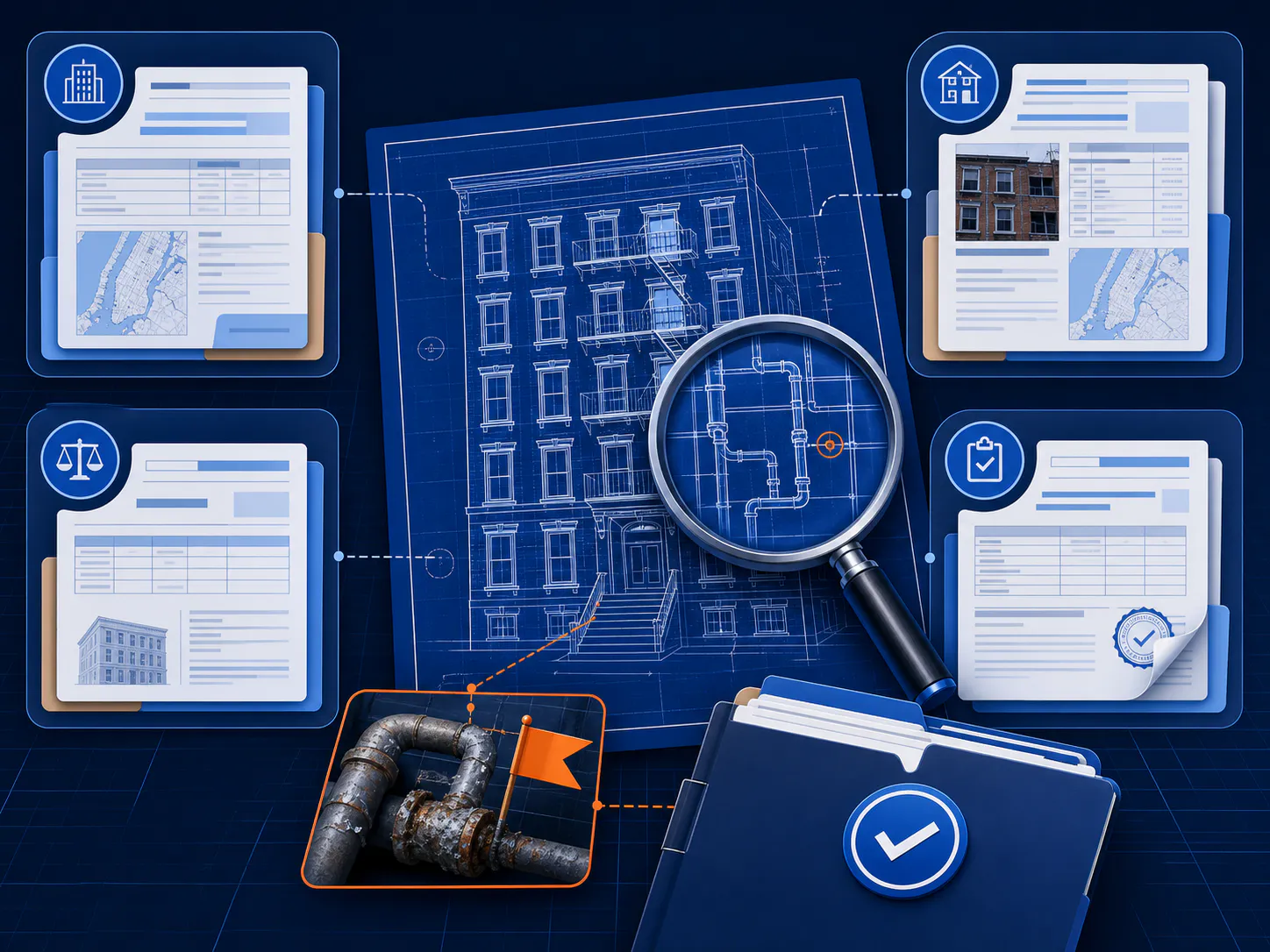
If you are buying a New York City building, do not wait for the title report to tell you there is a plumbing problem. Pull the public DOB Building Information Search and HPD Online records early, compare them with what you saw during the walkthrough, and decide whether the issue needs a seller cure, escrow holdback, price adjustment, or Licensed Master Plumber review.
This guide is for buyer due diligence. It explains where to look, what plumbing-related records can mean, and when a public record should turn into a field inspection. It is not legal advice, and it does not replace your attorney's contract review.
Why violation lookup belongs early in buyer due diligence
The fastest way to lose leverage is to discover open violations after contract terms are already tight. DOB and HPD records can point to open plumbing, gas, boiler, sewer, water, heat, hot water, permit, and correction issues. Some records are simple paperwork. Others can point to work that needs licensed filing, physical correction, inspection, or agency closeout.
Austin's pre-sale plumbing inspection service is built around that gap between a database result and the actual building. A search can tell you that a record exists. A Licensed Master Plumber can help determine whether the condition is still present, whether prior work was properly signed off, and what a buyer may inherit.
Use public lookups as a screening step, not as the whole answer. A clean-looking search does not prove every plumbing condition is safe or compliant. A messy search does not always mean the deal is bad. It means the buyer needs the right questions before the closing timeline gets narrow.
Step 1: Collect the building identifiers first
Start with the address, borough, block, lot, BIN if available, and any known alternate addresses. NYC records are not always searched cleanly from a marketing address alone. Corner buildings, condo units, mixed-use properties, and buildings with legacy addresses can have records that appear under a different address format.
Ask the seller or broker for the tax lot and building identification number if they have them. If they do not, your attorney, title company, or buyer-side team can usually identify them from public records. Keep those identifiers in one note so DOB, HPD, and OATH searches can be compared against the same property.
When a result looks empty, search again by block and lot where the tool allows it. Also check whether the property is a single building or part of a larger tax lot. A violation that appears under the parent building or lot can still matter to a buyer.
Step 2: Search DOB Building Information Search
DOB's Building Information Search is a practical starting point for buyer due diligence because it can surface building profile information, complaints, violations, permits, jobs, and related DOB records. For plumbing due diligence, the key question is not just "are there violations?" It is "do the DOB records show unresolved plumbing, gas, boiler, sewer, water, permit, or inspection issues?"
Look for open violations, dismissed or resolved violations, open permits, jobs without final sign-off, complaints tied to plumbing or gas, stop work orders, boiler items, and any recurring pattern around illegal work. A closed violation can still be useful context if it points to a condition that was repaired recently or a system that has had repeated problems.
If the DOB record references a code, summons, stop work order, or plumbing condition you do not understand, compare it with Austin's NYC plumbing and gas violation code library. The code library gives plain-English context, but your deal decision should be based on the actual property record and inspection findings.
Step 3: Check DOB NOW records, not just legacy DOB search
DOB records are split across older and newer systems. DOB NOW: Safety is relevant because DOB describes it as the portal for compliance filings and for viewing and searching violations and notices of deficiency, filing status, payments, and waiver requests. A buyer should not assume one DOB screen tells the whole story.
For plumbing-related due diligence, DOB NOW can matter when the building has boiler compliance, Local Law 152 gas piping, correction certification, or notice-of-deficiency history. The concern is not only whether work was performed. The concern is whether the required record was filed, accepted, dismissed, waived, or still open.
This is where buyers often need help. A seller may say a plumber already handled the issue. That may be true in the field and still incomplete in DOB records. Austin's DOB plumbing violation removal process is designed around research, corrective work, filing, inspection, and sign-off documentation, because field repair alone does not always close the agency record.
Step 4: Search HPD Online for housing conditions
HPD Online is the main public lookup for housing maintenance records. HPD says the system can show complaints, violations, property registration, charges, litigation, block and lot information, and vacate orders. For a buyer, HPD records are especially important in residential, mixed-use, and multifamily buildings.
Plumbing-related HPD items can include heat, hot water, leaks, waste lines, water supply, bathroom fixtures, mold tied to water intrusion, and tenant complaints that point to recurring service failures. A single old complaint may not be a deal issue. Repeated complaints or open violations around the same system deserve closer inspection.
Do not treat HPD and DOB as interchangeable. Austin's HPD vs. DOB plumbing violations guide explains the difference: HPD often focuses on tenant housing conditions, while DOB focuses on building, permit, equipment, plumbing, gas, and construction enforcement. A building can need action in both lanes.
Step 5: Check OATH/ECB if summonses appear
Some DOB violations lead to OATH/ECB summonses, hearings, penalties, or default judgments. If your DOB search shows a summons number or enforcement item, use the NYC OATH ECB Ticket Finder to cross-check the summons record. The goal is to understand whether the enforcement matter is still active, resolved, paid, dismissed, or unclear.
Avoid guessing from one line item. A DOB violation, a certificate of correction, and an OATH summons can be related but still have separate process steps. A buyer's attorney should decide how those items affect contract language, escrow, seller obligations, and closing conditions.
From the plumbing side, the practical question is whether the physical condition has been corrected and whether the agency record supports that. If not, the buyer may need a Licensed Master Plumber to inspect the condition, identify the proper correction path, and estimate what must happen before or after closing.
What plumbing warning signs should buyers flag?
Create a short issue log instead of saving random screenshots. For each item, capture the agency, record number, date, status, description, and why it may matter to the deal.
| Record type | Why it matters before buying |
|---|---|
| Open DOB plumbing or gas violation | May require licensed correction, permit filing, inspection, and agency sign-off |
| Open HPD heat, hot water, leak, or plumbing violation | May point to tenant-service obligations or unresolved building conditions |
| Open permit or job without final sign-off | Can suggest work was started but not fully closed in the DOB record |
| Stop work order | Can affect construction, legalization, and occupancy plans |
| Repeated complaints around the same system | May show a recurring physical condition, not a one-time tenant call |
| OATH/ECB summons tied to plumbing or gas | May create a separate enforcement or penalty issue from the field repair |
This table is a triage tool. It should not be used to diagnose the property without inspecting the building and reading the actual agency record.
How should a buyer use the results?
Separate the findings into three buckets: clear, needs explanation, and needs professional review. Clear items can be documented and moved into the closing file. Items that need explanation should go to the seller, attorney, broker, or managing agent for backup. Items that need professional review should be inspected before the buyer relies on seller assurances.
For plumbing, gas, boiler, water, sewer, and compliance issues, the professional review should often include a Licensed Master Plumber. A buyer-side inspection can connect the public record to visible conditions, recent repairs, open permits, closed permits, access limitations, and likely next steps.
The buyer should also compare this guide with Austin's Resource on plumbing violations that block NYC real estate sales. That article focuses on closing risk. This guide focuses on how to find the records early enough to act.
When should Austin review the building?
Call before closing pressure removes options. Austin can review the DOB and HPD record, walk the property, look for plumbing and heating conditions that match the public records, and identify whether the issue belongs in the violation, compliance, or service lane.
For buyers, the best time is after initial offer diligence and before the deal is locked into a narrow closing window. For brokers and attorneys, the best time is when a public record raises a specific question: open gas violation, boiler filing issue, unresolved HPD heat or hot water complaint, stop work order, illegal plumbing work, or a permit that never appears to have reached sign-off.
If the records show a plumbing, gas, boiler, water, or sewer issue that could affect closing, start with Austin's violation review. Send the notice, address, screenshots, or record numbers, and ask for a clear next-step read before the issue turns into a closing-day surprise.
Common Questions
Can a buyer look up DOB and HPD violations without the seller?
Yes. DOB Building Information Search, DOB NOW public records, HPD Online, and OATH ticket search tools expose public building records. A buyer should still have an attorney and qualified trade professional review what the records mean before relying on them.
Is an open HPD violation the same as an open DOB violation?
No. HPD generally tracks housing maintenance conditions and tenant complaints, while DOB tracks building, permit, plumbing, gas, boiler, and construction enforcement. The same property can have records in both systems, and resolving one agency record may not resolve the other.
When should a buyer call a Licensed Master Plumber?
Call when DOB or HPD records mention plumbing, gas, boiler, sewer, water, illegal work, open permits, stop work, or unclear correction status. A Licensed Master Plumber can connect the public record to the field condition before closing.