Key takeaways
- Treat active sewage or rising wastewater as an emergency. Protect occupants, reduce new discharge into the building drain, call Austin, and report raw sewage to 311.
- Do not guess whether the City sewer or the building caused the backup. Keep the 311 and DEP reference numbers while the private drain and service line are inspected.
- A cleared blockage is not always the end. A DEP Notice to Repair, damaged house connection, improper connection, or regulated grease problem can require licensed work, permits, inspections, and closeout records.
An active sewer backup is first a building-operations and contamination emergency. It becomes a compliance issue when the cause or corrective scope reaches a DEP notice, a sewer house connection, unpermitted work, an improper connection, or a regulated commercial grease system.
Owners do not need to choose between calling a plumber and reporting the condition. NYC DEP's Sewer Backups guidance tells property owners to report raw sewage immediately to 311. At the same time, a building-side investigation can determine whether a fixture branch, main building drain, cleanout, trap, ejector, or private sewer service line needs attention.
Austin's NYC sewer and drain service handles the immediate diagnosis and repair lane. This guide explains how to protect occupants, preserve the agency record, and recognize when the repair also needs a permit or compliance closeout.
What should an owner do while sewage is still backing up?
The immediate job is to stop exposure and prevent additional wastewater from reaching the affected drain. Keep people out of the contaminated area, stop or sharply reduce fixture use when it is safe to do so, and call for emergency plumbing service. Do not open a cleanout cap or handle standing sewage without the right protection.
NYC311's sewer-backup page says to call 911 when storm floodwater creates immediate danger. For a sewer backup without that immediate danger, report the backup to 311 and provide accurate contact information so DEP can investigate. Save the 311 service request number and any DEP Customer Service Request number.
Use this first-response order:
- Keep occupants, children, pets, and vulnerable people away from the affected space.
- Move people away from standing water near electrical equipment. Do not operate equipment or appliances in the wet area.
- Reduce new discharge from toilets, sinks, showers, laundry, dishwashers, and commercial fixtures until the drain condition is known.
- Photograph the water line, affected fixtures, cleanout area, and damaged materials without entering an unsafe area.
- Call a sewer and drain professional, then report the raw sewage to 311.
- Start a written incident log with the time, weather, affected fixtures, tenant reports, service calls, and reference numbers.
NYC311's sewage and flood clean-up guidance says flood or sewer water may contain germs. It recommends protective boots, gloves, and goggles, keeping children, pets, and people with compromised immune systems out, and using professional cleanup for extensive damage.
How do you tell a localized clog from a building-wide backup?
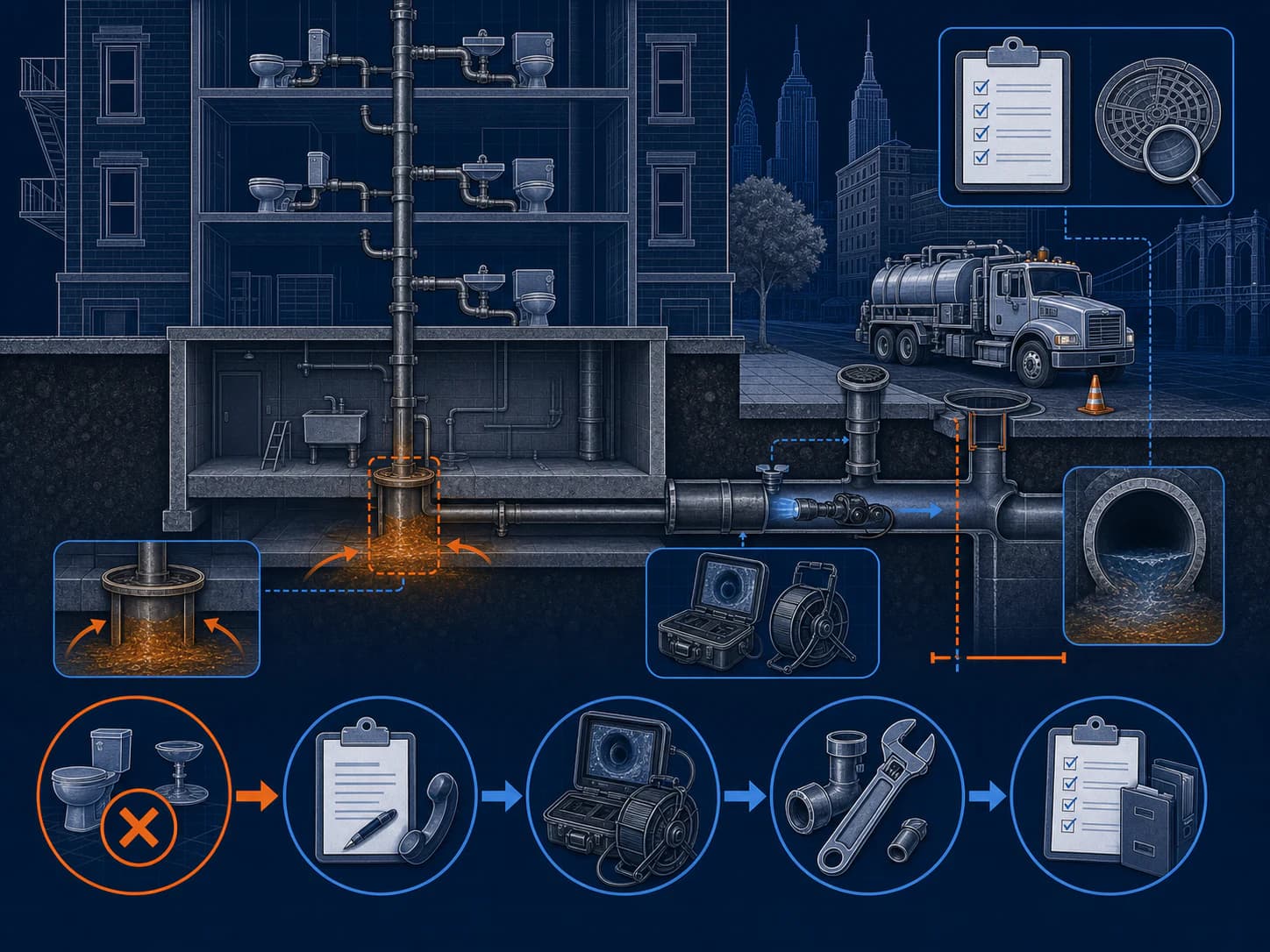
The pattern of affected fixtures helps define the first inspection, but it does not prove responsibility by itself. One slow sink may indicate a fixture or branch blockage. Wastewater rising at the lowest basement drain when upper fixtures discharge points toward a main building drain, house trap, ejector, or private service-line problem.
| What the building is showing | First working question | Owner action |
|---|---|---|
| One fixture is slow and the rest drain normally | Is the blockage limited to the trap or branch? | Stop using that fixture and schedule service before it spreads. |
| Several fixtures on one stack are affected | Is one branch or stack restricted? | Limit use on that line and inspect the shared piping. |
| Basement floor drain or toilet rises when upper floors discharge | Is the main building drain or private service line blocked? | Treat it as urgent and reduce building-wide water use. |
| Backup appears only during heavy rain | Is the public sewer surcharged, or is a private condition allowing inflow or backflow? | Report each event to 311 and inspect the private system instead of assuming the City is responsible. |
| The line clears but backs up again | Is grease, roots, a broken pipe, poor pitch, a collapsed section, or an improper connection still present? | Move from clearing to camera-based diagnosis and a written repair recommendation. |
A service call should produce more than "the drain is open." For recurring backups, the useful record identifies where the blockage was found, what method restored flow, whether a camera could pass, what the pipe showed, and whether the condition points to routine maintenance or structural repair.
Who decides whether the problem is in the City sewer or the private line?
DEP investigates the 311 complaint and determines what it can confirm in the public sewer system. Its current guidance says DEP aims to inspect within six hours, although heavy rain or large snowmelt can delay that response. If DEP confirms a City sewer problem, it starts the repair process. If it confirms a private sewer service-line problem, it issues the owner a Notice to Repair.
That distinction matters because NYC DEP says property owners are responsible for the private sewer service line connecting their property to the City sewer main in the street. The building's internal drain piping and private service line therefore remain part of the owner's investigation even while a 311 complaint is open.
Keep both records moving:
- Give DEP accurate access and contact information.
- Save the 311 tracking number and DEP CSR number.
- Record whether DEP confirmed, could not confirm, or ruled out a public-sewer condition.
- Keep the plumber's cleaning and camera findings tied to the date and affected line.
- Do not describe the problem as "the City's sewer" or "the building's line" until the evidence supports that conclusion.
This parallel record is especially useful after a heavy-rain event. A backup can clear before an inspector arrives, and a cleared fixture does not explain whether the public main, private service line, or building drain caused the condition.
When does a sewer backup become a compliance or permit issue?
Most removable clogs remain service work. The issue crosses into compliance when an agency notice arrives or the permanent correction changes a regulated sewer connection, legal drainage path, or commercial grease-control system.
DEP issues a Notice to Repair
A private-line determination creates an owner repair obligation. The notice, DEP inspection information, and plumber's field findings should be reviewed together before excavation or replacement begins.
The sewer house connection needs repair or relay
NYC DEP's sewer connection guidance says a Licensed Master Plumber must file the permit application to repair or relay an existing sewer house connection. A recurring backup that reveals roots, offset joints, a break, or a collapsed lateral can therefore move from cleaning and camera work into permitted repair.
The connection or drainage path is undocumented
New connections require DEP approval and a sewer connection permit. DEP also says sewer certification may be required for alterations or renovations that increase sanitary or storm flow. The certification is prepared by a New York State Professional Engineer or Registered Architect, and the later connection permit authorizes the work.
NYC DOB's House Connections page explains the split inspection path: DEP handles the sewer connection work in the street, while DOB may inspect work behind the property line. A Licensed Master Plumber coordinates the relevant permits and inspections.
A commercial grease system contributed to the backup
For restaurants and other grease-generating operations, a recurring backup may be both a drain problem and a DEP compliance problem. DEP requires covered businesses to correctly install, operate, and maintain properly sized grease interceptors. If grease loading, an undersized interceptor, or poor maintenance contributed to the backup, clearing the line alone does not correct the regulated condition.
Austin's grease trap compliance service and commercial kitchen plumbing practice cover that separate owner decision.
What evidence should the sewer inspection produce?
The inspection record should help an owner approve the right scope and explain the event later. A recurring backup deserves a location-based finding, not a generic invoice for snaking or jetting.
Ask the service team to record:
- Which fixtures and floors were affected.
- Whether the backup changed when building water use stopped.
- The cleanout or access point used.
- The approximate location and type of blockage.
- Whether the line was mechanically cleared, jetted, or both.
- Whether a camera could pass through the full inspected section.
- Visible grease, roots, cracks, offsets, standing water, poor pitch, breaks, or collapse.
- The apparent boundary between internal piping and the private sewer service line.
- Whether the condition needs maintenance, spot repair, relay, or a broader design and permit review.
- Photos, video, and a written recommendation tied to the property and service date.
If the line cannot be inspected after flow is restored, the record should say why. Heavy debris, standing water, a blocked trap, an inaccessible cleanout, or a pipe that the camera cannot pass are findings that affect the next step.
What belongs in the owner closeout file?
A complete closeout file separates emergency response from permanent correction. It also gives a property manager a usable record if the backup returns, a tenant complaint develops, an insurer asks for proof, or DEP follows up.
Keep:
- The 311 service request number and DEP CSR number.
- DEP findings, notices, and inspector contact information.
- The plumber's emergency service report.
- Before-and-after photos and camera video.
- A marked sketch showing the inspected building drain, private service line, and City-main connection.
- Cleaning, jetting, root removal, or repair records.
- DEP and DOB permits, inspection results, and sign-off documents when required.
- Grease-interceptor maintenance, pump-out, sizing, and correction records for commercial uses.
- Cleanup invoices and a list of discarded or restored materials.
- Tenant and staff notices with dates and access notes.
Property managers can add this record to the same operating file used for recurring compliance work. Austin's NYC property manager compliance calendar shows how sewer, backflow, gas, boiler, and open-agency records fit into one review rhythm.
Where does Austin fit?
Call Austin when sewage is actively backing up, multiple fixtures are affected, the lowest drain rises when upper floors discharge, or a prior clearing did not solve the cause. The first goal is to protect the building and restore safe drainage. The next is to document whether the problem is a removable blockage, a damaged private line, or a permit and compliance project.
For active conditions, call (718) 835-3555. For a recurring or cleared problem, bring the service history, 311 and DEP numbers, camera video, repair notice, prior sewer records, and any commercial grease documentation. Austin can then separate the emergency response from the licensed repair and filing path.
Common Questions
Should an NYC owner call 311 or a plumber for a sewer backup?
Do both when raw sewage is backing up. NYC DEP directs property owners to report the condition immediately to 311, while a qualified plumber can isolate the building-side problem, restore safe flow where possible, and document whether the blockage appears to be in the internal drain or private sewer service line.
Who is responsible for the sewer line between an NYC building and the street main?
NYC DEP says the property owner owns and is responsible for maintaining and repairing the private sewer service line connecting the property to the City sewer main. DEP investigates the complaint and may issue a Notice to Repair when it confirms a private-line problem.
Does every sewer backup create a DEP or DOB violation?
No. A removable blockage may remain a service issue. The matter moves into a compliance or permit lane when DEP issues a repair notice, the sewer house connection needs repair or relay, unpermitted work or an improper connection is found, or a regulated grease-interceptor condition contributed to the backup.
Does an NYC sewer house connection repair require a permit?
Yes. NYC DEP says a Licensed Master Plumber must file an application for a permit to repair or relay an existing sewer house connection. New connections and some projects that increase sanitary or storm flow can also require a sewer certification prepared by a Professional Engineer or Registered Architect.
What should an owner do about sewage-contaminated areas?
Keep occupants, children, pets, and people with compromised immune systems out of the affected area. NYC311 advises avoiding direct contact, keeping electrical equipment away from standing water, using protective boots, gloves, and goggles for cleanup, and hiring professional cleaning help when the damage is extensive.